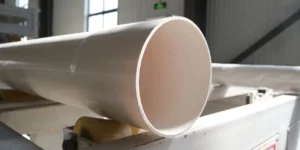
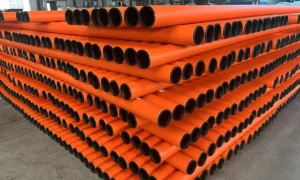
PVC pipe is everywhere—from the plumbing in your home to the irrigation systems that grow our food and the vast networks that deliver clean water to cities. As one of the most widely used plastic materials in the world, polyvinyl chloride (PVC) pipe has revolutionized the piping industry since its introduction over 60 years ago.
But PVC pipe is not a single, simple product. It comes in various types, schedules, and pressure ratings, each designed for specific applications. This comprehensive guide covers everything you need to know about PVC pipe, including its types, dimensions, key applications, and advantages.
What Is PVC Pipe?
PVC (Polyvinyl Chloride) pipe is a synthetic plastic polymer widely used in various piping systems due to its durability, cost-effectiveness, and ease of use. It is a man-made hydrocarbon polymer and one of the most utilized plumbing materials in the world. PVC pipe is produced through an extrusion process, where molten polymer is forced through a die in the shape of an annulus, forming a pipe of the required diameter and wall thickness upon solidification.
The smooth interior surface of PVC pipes reduces friction, promoting efficient water flow and reducing pumping costs and energy use. PVC is also non-reactive, resists corrosion and chemical damage, significantly prolonging its service life.
Key Characteristics
Types of PVC Pipes
PVC pipes are generally categorized into several types based on their formulation and properties:
1. PVC (Plasticized PVC)
Standard PVC that includes plasticizers, making it softer and more flexible. This flexibility makes it easier to snake through channels and reduces the risk of cracking during installation.
2. PVC-U (Unplasticized PVC)
Also known as rigid PVC, this type contains no plasticizers, making it more rigid and durable than standard PVC. PVC-U has high resistance to chemicals and corrosion and is often used in plumbing, drainage, and sewage applications. It is WRAS-approved for many potable water applications.
3. CPVC (Chlorinated PVC)
Created by adding chlorine to PVC, CPVC is stronger and can withstand higher temperatures (up to 160°F / 71°C). It is commonly used for hot water distribution, HVAC systems, and industrial applications requiring higher heat tolerance.
4. PVC-O (Molecular-Oriented PVC)
Produced through a molecular orientation process that aligns the polymer chains, significantly improving impact resistance and pressure capacity. Used in demanding applications such as water mains under high pressure.
5. PVC-Hi (High Impact PVC)
Includes impact modifiers to improve toughness and resistance to physical damage, suitable for applications where pipes may be subjected to rough handling or ground movement.
6. Coextruded PVC with Recycled Content (ASTM F1760)
This specification covers coextruded PVC pipe with a center layer containing reprocessed-recycled PVC content and inner/outer layers made of virgin PVC compound. It is used for non-pressure applications such as sewer and drain systems.
PVC Schedules & Pressure Ratings
The most common way to classify PVC pipe is by schedule, which refers to the wall thickness of the pipe. The thicker the wall, the higher the pressure rating.
Schedule 40 vs. Schedule 80
Schedule 40 is the standard for most general-purpose applications. It has thinner walls and is commonly used in drainage, irrigation, and residential plumbing systems where lower pressure ratings are acceptable.
Schedule 80 has thicker walls and a higher pressure rating, making it ideal for industrial and high-pressure applications such as water supply systems and chemical processing.
Pressure Ratings (Schedule 40 at 23°C)
| Nominal Size | Wall Thickness (in) | Working Pressure (PSI) |
|---|---|---|
| 1/2″ | 0.109 | 600 |
| 3/4″ | 0.113 | 480 |
| 1″ | 0.133 | 450 |
| 1-1/2″ | 0.145 | 330 |
| 2″ | 0.154 | 280 |
| 3″ | 0.216 | 260 |
| 4″ | 0.237 | 220 |
| 6″ | 0.280 | 180 |
Note: Pressure ratings decrease with larger diameters and higher temperatures.
Schedule 40 Dimensions
| Nominal Size (in) | Outside Diameter (in) | Wall Thickness (in) | Weight (lb/ft) |
|---|---|---|---|
| 1/2 | 0.840 | 0.109 | 0.17 |
| 3/4 | 1.050 | 0.113 | 0.23 |
| 1 | 1.315 | 0.133 | 0.34 |
| 1 1/2 | 1.900 | 0.145 | 0.55 |
| 2 | 2.375 | 0.154 | 0.74 |
| 3 | 3.500 | 0.216 | 1.54 |
| 4 | 4.500 | 0.237 | 2.20 |
| 6 | 6.625 | 0.280 | 3.86 |
DWV (Drain, Waste, and Vent) PVC
DWV PVC is designed for non-pressure drainage and venting applications. It has thinner walls than pressure-rated pipe. Important: DWV fittings are less expensive but are not designed to handle high pressures and may fail if used in pressure applications. Always use pressure-rated fittings for pressure systems.
Key Applications of PVC Pipes
1. Water Supply & Plumbing
The most widespread use of PVC pipes concerns water transit through plumbing systems. PVC pipes are widely used in residential and commercial plumbing for distributing potable water under normal household pressures. CPVC is used for hot water distribution.
2. Drainage, Waste, and Sewerage
PVC pipes play a vital role in handling waste materials. Sinks, toilets, and manufacturing equipment all use PVC pipes in their vent and drain systems. Sewers and municipal wastewater removal systems rely on PVC pipes because of their flexibility, corrosion resistance, and resistance to microbiological film growth.
3. Irrigation
PVC is generally the piping of choice for irrigation systems. It is easy to work with, inexpensive, and quite common. Schedule 40 PVC is widely used in agricultural and landscape irrigation systems due to its ability to withstand moderate pressures while being cost-effective and easy to install.
4. Electrical Conduits
PVC serves as an electrical conduit, providing protection for wiring in both residential and commercial applications.
5. Chemical Handling
With its resistance to many chemicals that metals cannot handle—such as hydrochloric acid—PVC is widely used in chemical processing plants. Schedule 80 PVC is often chosen for chemical transport due to its high-pressure rating and chemical resistance.
6. Building Infrastructure (HVAC)
PVC and CPVC ductwork is commonly used in air conditioning, heating, and ventilation systems due to its insulation and durability.
7. Fire Protection Systems
PVC pipes are used in certain fire protection systems, particularly for underground fire service mains, where they must withstand high pressure during emergencies.
Advantages of PVC Pipes Over Metal Pipes
PVC pipes offer several advantages over traditional metal piping materials such as iron, steel, and copper:
Frequently Asked Questions (FAQ)
Q1: What is the difference between Schedule 40 and Schedule 80 PVC?
Schedule 80 has a thicker wall than Schedule 40, giving it a higher pressure rating. Schedule 40 is used for general applications such as drainage and irrigation; Schedule 80 is used for industrial and high-pressure applications.
Q2: Can PVC pipe be used for hot water?
Standard PVC is not recommended for continuous hot water use (limited to 140°F / 60°C). For hot water, use CPVC, which can handle up to 160°F / 71°C.
Q3: Is PVC pipe safe for drinking water?
Yes. PVC pipe manufactured to standards like ASTM D1785 is approved for potable water distribution, and CPVC is also approved for hot potable water.
Q4: What is the difference between PVC-U and standard PVC?
PVC-U (Unplasticized PVC) contains no plasticizers, making it more rigid and durable. Standard PVC includes plasticizers for flexibility.
Q5: How long does PVC pipe last?
PVC pipes can last up to 50 years or more when properly installed and used within their design parameters.
Q6: Can I use DWV fittings for pressure applications?
No. Drain, Waste, and Vent (DWV) fittings are not designed to handle high pressure and may fail if used in pressure applications. Always use pressure-rated fittings for pressure systems.
Q7: Is PVC better than metal pipe?
PVC is generally more cost-effective, lighter, and corrosion-resistant than metal pipes, but metal pipes may be better for extremely high-temperature or very high-pressure applications.
Conclusion
PVC pipe is a versatile, durable, and cost-effective material that has become essential to modern infrastructure. From irrigation and water supply to sewerage and electrical conduit, PVC pipe offers reliable performance across a broad range of applications.
Key takeaways for choosing the right PVC pipe:
| Requirement | Recommended Pipe Type |
|---|---|
| General plumbing, drainage, irrigation | Schedule 40 PVC-U |
| Higher pressure, industrial use | Schedule 80 PVC-U |
| Hot water distribution | CPVC |
| Drainage and venting (non-pressure) | DWV PVC |
By understanding the different types, schedules, and pressure ratings, you can select the optimal PVC pipe for your specific application—ensuring long-term performance and value.