Are you tired of dealing with rusty, leaking, or bursting water supply pipes? Traditional cast iron, galvanized, and lower-grade PVC pipes often fail over time due to corrosion, pressure limitations, and bacteria buildup.
In municipal networks, rural drinking water projects, agricultural irrigation, and industrial applications, your piping material directly dictates water safety, service life, and total installation cost.
Today, HDPE (High-Density Polyethylene) water pipes have become the industry standard for modern water distribution systems. Here is everything you need to know about why HDPE pipes are replacing traditional piping materials—and how to choose the right one.
Executive Summary: Key Benefits of HDPE Pipes
- Lifespan: Up to 50+ years with zero corrosion.
- Leak Prevention: 100% leak-free heat fusion and electrofusion joints.
- Safety: Made from virgin PE100 resin, 100% non-toxic for potable water.
- Cost Efficiency: 8x lighter than cast iron; supports trenchless installation to lower labor costs.
- Key Advantages of HDPE Water Supply Pipes
1.1 Maximum Corrosion Resistance (50+ Year Lifespan)
HDPE pipes are manufactured from high-density polyethylene, resisting chemical attacks from acids, alkalis, and salts. Carbon black is integrated into the material matrix to prevent UV degradation, protecting the pipe against rapid aging during outdoor storage or exposure.
1.2 Hygienic & Safe for Potable Drinking Water
High-quality HDPE pipes utilize 100% virgin PE100 raw materials. They are non-toxic, odorless, and completely free of recycled material. Fully compliant with international drinking water standards (such as GB/T 13663 and NSF certifications), they ensure zero water contamination.
1.3 Seamless Heat Fusion: Zero Leaks & High-Pressure Resistance
Unlike traditional metal or PVC pipes that rely on mechanical joints and rubber gaskets—which degrade and leak over time—HDPE pipes are joined using heat fusion or electrofusion. This process creates a continuous, seamless joint that is as strong as the pipe itself, preventing leaks and underground stress cracking.
1.4 Lightweight Design & Significant Cost Savings
HDPE pipes weigh approximately 1/8th as much as cast iron pipes, making transportation and handling much easier. Furthermore, HDPE supports trenchless installation (horizontal directional drilling), reducing soil disruption, labor requirements, and overall project schedules. - HDPE Pipe vs. Traditional Materials
Feature HDPE Pipes (PE100) Traditional Cast Iron Standard PVC Pipes
Corrosion Resistance Excellent (Rust-proof) Poor (Prone to rust) Moderate
Joint Integrity Seamless (Heat Fused) Gasketed (Prone to leaks) Solvent / Gasket
Lifespan 50+ Years 15–20 Years 20–30 Years
Installation Cost Low (Supports Trenchless) Very High (Heavy equipment) Moderate
Flexibility / Impact High (Resists ground movement) Brittle Low-to-Moderate - Top Applications for HDPE Piping Systems
Municipal Water Networks: The premier choice for main water distribution supply trunks and urban utilities.
Rural Drinking Water Projects: Ideal for long-distance, lightweight, and easy-to-install safe drinking water networks.
Agricultural & Forestry Irrigation: Used in farmland drip irrigation and landscape sprinklers; highly resistant to UV rays, soil chemicals, and field burial environments.
Industrial & Chemical Transfer: Superior resistance to acidic and alkaline liquids, ensuring stable industrial wastewater and clean-water delivery.
Commercial & Residential Buildings: Clean water delivery for high-rise residential plumbing and factory systems. - How to Inspect & Select Quality HDPE Water Pipes
To ensure you buy high-grade HDPE pipes and avoid low-quality recycled alternatives, follow these 5 inspection steps:
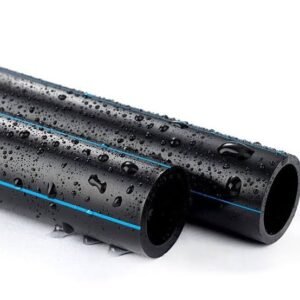
Check the Color: Premium potable water pipes are solid black (due to uniform carbon black distribution). Off-colors, gray hues, or internal striping often indicate recycled content.
Conduct a Smell Test: Virgin PE100 material has virtually no odor. Recycled or contaminated materials give off a strong, pungent plastic smell.
Verify Markings & Standards: Ensure the pipe exterior is permanently stamped with “Potable Water”, the pressure rating (e.g., PN10, PN16), and the standard number (such as GB/T 13663 or ISO/EN equivalents).
Test Flexibility & Toughness: High-quality HDPE is highly resilient. When bent or crushed, it should absorb the force without cracking or whitening at the stress points.
Select the Correct Size & SDR Rating: Match your flow rate and working pressure requirements, from small-diameter domestic lines to large-diameter main water trunks.
Conclusion: Upgrade Your Water Supply System Today
Choosing the right pipe material saves time, reduces long-term maintenance costs, and protects water quality. With its 50-year lifespan, 100% leak-free fused joints, hygienic safety, and low installation overhead, HDPE water piping is the smartest investment for modern plumbing and civil engineering projects.
FAQ (Frequently Asked Questions)
Q1: Can HDPE pipes be used for hot water supply?
A: Standard PE100 HDPE pipes are designed primarily for cold water distribution (up to 40°C/104°F). For hot water applications, specialized materials like PE-RT or PEX are recommended.
Q2: What is the difference between PE80 and PE100 HDPE pipes?
A: PE100 is a higher-density material with stronger tensile strength and higher pressure resistance than PE80, allowing for thinner pipe walls with the same working pressure.