Introduction
Polyvinyl chloride (PVC) pipes have become one of the most widely used piping materials in modern construction, plumbing, and infrastructure projects worldwide. Since their introduction over 60 years ago, PVC pipes have revolutionized the piping industry, offering a combination of durability, cost-effectiveness, and versatility that traditional materials like metal and concrete simply cannot match. Today, PVC pipes are the material of choice for applications ranging from residential plumbing to major municipal water distribution networks.
The global PVC pipes market was volumed at 26.89 million tons in 2025 and is projected to reach 37.60 million tons by 2034, reflecting a compound annual growth rate of 3.66%. This steady growth is driven by rapid urbanization, infrastructure development, and the increasing recognition of PVC’s superior performance characteristics. This article explores the key advantages of PVC pipes and their diverse applications across multiple industries.
Key Advantages of PVC Pipes
1. Exceptional Durability and Longevity
One of the most significant advantages of PVC pipes is their exceptional durability. Unlike metal pipes, PVC is resistant to corrosion and chemical damage, ensuring that it does not degrade over time when exposed to water, soil, or chemicals. This resistance to corrosion is a primary advantage over traditional metal piping—while steel corrodes and wood rots, PVC is immune to moisture, salt spray, and most industrial acids and alkalis.
Research has confirmed that properly installed PVC pipes have an estimated service life of 70 to 100+ years. A comprehensive study by the Utah Water Research Laboratory examined PVC pipe excavations and life cycle analyses from around the world, confirming that PVC pipes degrade slower than non-PVC alternatives, boasting an estimated lifespan of more than 100 years. Furthermore, a 2023 study from Utah State University found that PVC water pipes have the lowest break rates at just 2.9 breaks per 100 miles per year, significantly outperforming asbestos cement (10.3), cast iron (28.6), ductile iron (5.1), and steel (9.2).
2. Superior Corrosion and Chemical Resistance
PVC pipes are entirely non-reactive to water, soil, and most common chemicals. This inherent resistance ensures that the internal bore of the pipe remains smooth over decades of service, preventing clogs and maintaining consistent water pressure—a benefit that metal pipes often lose due to scale buildup.
Rigid PVC (uPVC) exhibits strong resistance to acids, bases, alcohols, fats, and salts, making it suitable for use in chemical piping and industrial applications. PVC is generally resistant to most acids, bases, salts, aliphatic solutions, oxidants, and halogens. This chemical inertness is particularly valuable in industrial settings where pipes must transport aggressive fluids or operate in corrosive environments.
3. Lightweight and Easy Installation
PVC pipes are significantly lighter than their metal counterparts, making them easier to handle and transport, especially on large construction sites. The lighter weight drastically reduces transportation costs and makes the pipes easier and safer for installers to handle on-site. This also simplifies the installation process, reducing the need for heavy equipment or multiple workers.
Unlike metal pipes, which often require complex soldering, threading, or heavy machinery for welding, PVC is joined using simple solvent cement. This quick and straightforward joining process requires fewer specialized tools and less training, dramatically speeding up installation time and lowering overall labor expenses. A survey of plumbers estimated an installation savings of 60–70% when using PVC pipe compared to copper.
4. Cost-Effectiveness
PVC is significantly less expensive to manufacture than copper or steel, providing immediate project savings. Despite their lower cost, PVC pipes offer high performance and durability, making them a smart choice for budget-conscious projects. The installation process is also more straightforward, requiring fewer specialized tools and less labor, which further reduces costs.
The cost benefits extend beyond initial installation. PVC’s durability and longevity reduce maintenance and replacement needs, meaning less water loss due to corrosion compared to alternative products such as iron and concrete piping.
5. Smooth Internal Surface and Hydraulic Efficiency
PVC pipes have a smooth internal surface with a low friction coefficient (approximately 0.009), which significantly reduces fluidity resistance. This smooth surface allows more flow than other material pipes of the same size, reducing pumping costs and energy consumption.
The smooth interior also prevents scale buildup and bacterial growth, maintaining high water flow efficiency over decades. This hydraulic efficiency is particularly valuable in irrigation systems, where reduced friction translates to lower pumping costs and improved water delivery.
6. Environmental Sustainability
PVC pipes offer significant environmental advantages over traditional materials. According to McKinsey research, PVC sewer pipes produce 35% fewer greenhouse gas emissions than ductile iron and 45% fewer than reinforced concrete. Additionally, manufacturing PVC water pipes consumes only a quarter of the energy required for concrete and half the energy needed for iron pipe production.
A life cycle assessment study found that the energy consumption of PVC-U pipe in building water supply systems could be reduced by 86% compared with galvanized steel pipe and 91% compared with copper pipe. PVC pipes are also recyclable, and their lighter weight reduces transportation-related carbon emissions.
7. Excellent Insulation Properties
PVC offers superior thermal insulation compared to aluminum or steel, improving building energy efficiency. Additionally, uPVC and CPVC pipes are poor conductors of heat and electricity, making them safe for hot water systems and underground electrical and telecommunication conduit systems.
8. Fire Safety
PVC is naturally self-extinguishing due to its high chlorine content. It is difficult to ignite and chars rather than generating flaming droplets, behaving better than many other organic building materials.
9. Versatility in Manufacturing
PVC can be formulated to be rigid (uPVC) for pipes and profiles, or flexible (PVC-P) for specialized applications. This versatility allows manufacturers to produce pipes tailored to specific requirements, from high-pressure water mains to flexible irrigation tubing.
Applications of PVC Pipes
1. Water Supply and Plumbing
The most widespread use of PVC pipes is in water distribution through plumbing systems. PVC pipes are widely used in residential and commercial plumbing for distributing potable water under normal household pressures. uPVC pipes are the ideal choice for potable drinking water, featuring lead-free technology that ensures no harmful substances leach into the water.
Pressure-rated PVC pipes are used in:
- Water mains and service lines
- Building water supply systems
- Reticulation mains for municipal distribution
CPVC (chlorinated PVC) is specifically designed for hot water applications, capable of handling higher temperatures without compromising structural integrity.
2. Drainage, Waste, and Sewerage
PVC pipes play a vital role in handling waste materials. Sinks, toilets, and manufacturing equipment all use PVC pipes in their vent and drain systems. PVC-U pipes and fittings are used for sewer, drain, waste, and vent applications both above ground and below ground.
Applications include:
- Sanitary sewer systems
- Stormwater networks
- Drain-waste-and-vent (DWV) plumbing systems
- Treated wastewater conveyance
- Underground drainage and sewerage for domestic and industrial waste
Solid Wall PVC pipe provides hydraulic efficiency, corrosion and chemical resistance, and watertight joints for sanitary sewer, drainage, and underdrain applications.
3. Irrigation and Agriculture
Irrigation represents one of the largest application segments for PVC pipes. PVC is generally the piping of choice for irrigation systems due to its corrosion resistance, lightweight nature, and smooth interior surfaces that reduce friction and pumping costs.
PVC piping plays a pivotal role in agriculture as it is:
- Corrosion-resistant and durable
- Ideal for gravity-fed irrigation
- Suitable for potable water delivery to remote fields
- Effective for canal linings where flood prevention and water conservation are priorities
PVC pressure pipes are typically used in irrigation applications, while the non-pressure range can be used in sanitary, sewer, and stormwater applications.
4. Electrical and Telecommunications Conduit
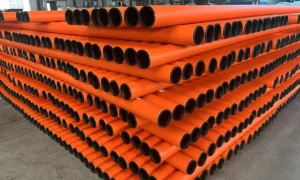
PVC pipes are extensively used as electrical conduits, providing protection for wiring in both residential and commercial applications. PVC conduit is a rigid, nonmetallic conduit system for electrical and low-voltage wiring, manufactured from virgin PVC resin with corrosion, rust, and UV resistance.
Applications include:
- Underground electrical power and communication cables
- Cable protection for electric power and telecommunication systems
- Telecom and utility ducts
- Data transmission systems
uPVC and CPVC pipes are poor conductors of heat and electricity, making them safe for underground electrical and telecom conduit systems.
5. Industrial Applications
PVC pipes are widely used in industrial settings due to their chemical resistance and durability. PVC-U pipes offer a reliable solution for demanding industrial applications as plasticizer-free chemical pipes.
Typical industrial applications include:
- Chemical processing and fertilizer industry fluid handling
- Industrial process pipelines
- High-purity applications and potable water systems
- Water and wastewater treatment
- Slurry pipelines carrying abrasive and corrosive mine or quarry materials
- Effluent pipelines for pumped sewage, industrial and rural wastes
FIP PVC is designed to give a high level of chemical resistance, making it ideal for the safe transportation of many acids, alkalis, and chemical concentrates without fear of corrosion or environmental pollution.
6. HVAC Systems
PVC and CPVC ductwork is commonly used in air conditioning, heating, and ventilation systems due to its insulation and durability.
7. Fire Protection Systems
PVC pipes are used in certain fire protection systems, particularly for underground fire service mains, where they must withstand high pressure during emergencies.
Conclusion
PVC pipes have become an indispensable component of modern infrastructure due to their unique combination of advantages: exceptional durability with a service life exceeding 100 years, superior corrosion and chemical resistance, lightweight construction that simplifies installation, cost-effectiveness, smooth internal surfaces that ensure hydraulic efficiency, and significant environmental benefits including lower energy consumption and greenhouse gas emissions compared to traditional materials.
From residential plumbing and municipal water distribution to agricultural irrigation, electrical conduit, and industrial chemical processing, PVC pipes deliver reliable performance across a remarkably broad range of applications. As urbanization accelerates and infrastructure demands grow worldwide, PVC pipes will continue to play a vital role in building sustainable, efficient, and durable piping systems for generations to come.