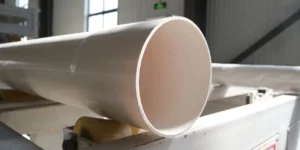
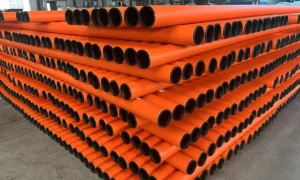
PVC pipe is everywhere—from the plumbing in your home to the irrigation systems that grow our food and the vast networks that deliver clean water to cities. As one of the most widely used plastic materials in the world, polyvinyl chloride (PVC) pipe has revolutionized the piping industry since its introduction over 60 years ago .
But PVC pipe is not a single, simple product. It comes in various types, schedules, and pressure ratings, each designed for specific applications. This comprehensive guide covers everything you need to know about PVC pipe, including its types, dimensions, key applications, advantages over traditional materials, and how to select the right pipe for your project.
What Is PVC Pipe?
PVC pipe is a tubular product made from polyvinyl chloride, a synthetic resin composed of polymerized vinyl chloride monomers . It is primarily produced through an extrusion process, where molten polymer is forced through a die in the shape of an annulus, forming a pipe of the required diameter and wall thickness upon solidification .
Key Characteristics
PVC Pipe Market Overview
The global PVC pipes market is experiencing significant growth. In 2024, the market size reached 25.9 million tons, and it is forecast to reach 36.3 million tons by 2033, with a compound annual growth rate (CAGR) of 3.8% .
This growth is driven by:
- Rapid urbanization and infrastructure development
- Increasing focus on water conservation and management
- Growing product adoption in the agricultural sector
- Rising advancements in manufacturing technologies
- Substantial investments in water and sanitation infrastructure projects
Types of PVC Pipe
PVC pipes are generally categorized into several types based on their formulation and properties :
1. PVC-U (Unplasticized PVC)
Also known as rigid PVC, this is the most common type used for pipes and fittings. It contains no plasticizers, making it strong and rigid. Most standard Schedule 40 and 80 pipes are PVC-U.
2. C-PVC (Chlorinated PVC)
C-PVC is produced by chlorinating PVC resin, which increases its temperature resistance. It can handle temperatures up to 160°F (71°C), compared to standard PVC’s 140°F limit . C-PVC is commonly used for hot water distribution systems.
3. PVC-O (Molecular-Oriented PVC)
PVC-O is produced through a molecular orientation process that aligns the polymer chains, significantly improving impact resistance and pressure capacity. It is used in demanding applications such as water mains under high pressure and in areas with challenging soil conditions . PVC-O pipes are designed for conveying cold water under pressure up to 25 bar (approximately 362 psi) .
4. PVC-Hi (High Impact PVC)
This type includes impact modifiers to improve toughness and resistance to physical damage, making it suitable for applications where pipes may be subjected to rough handling or ground movement.
PVC Pipe Schedules & Pressure Ratings
The most common way to classify PVC pipe is by schedule, which refers to the wall thickness of the pipe. The thicker the wall, the higher the pressure rating.
Schedule 40 vs. Schedule 80 vs. Schedule 120
Schedule 40 is the standard for most general-purpose applications. Schedule 80 has a thicker wall and higher pressure rating. Schedule 120 has the thickest wall and is used for special, high-pressure requirements .
Dimensions for PVC Pipe per ASTM D-1785 (Schedule 40, 80, and 120) :
| Size (inch) | Outside Diameter (mm) | Wall Thickness (SCH 40) | Wall Thickness (SCH 80) | Wall Thickness (SCH 120) |
|---|---|---|---|---|
| 1/2 | 21.34 ± 0.10 | 2.77 – 3.28 | 3.73 – 4.24 | 4.32 – 4.83 |
| 3/4 | 26.67 ± 0.10 | 2.87 – 3.38 | 3.91 – 4.42 | 4.32 – 4.83 |
| 1 | 33.40 ± 0.13 | 3.38 – 3.89 | 4.55 – 5.08 | 5.08 – 5.69 |
| 1 1/2 | 48.26 ± 0.15 | 3.68 – 4.19 | 5.08 – 5.69 | 5.72 – 6.40 |
| 2 | 60.32 ± 0.15 | 3.91 – 4.42 | 5.54 – 6.20 | 6.35 – 7.11 |
| 3 | 88.90 ± 0.20 | 5.49 – 6.15 | 7.62 – 8.53 | 8.89 – 9.96 |
| 4 | 114.30 ± 0.23 | 6.02 – 6.73 | 8.56 – 9.58 | 11.10 – 12.42 |
| 6 | 168.28 ± 0.28 | 7.11 – 7.97 | 10.97 – 12.29 | 14.27 – 15.97 |
Note: Schedule 120 pipes are typically manufactured only on special request .
Drain, Waste, and Vent (DWV) PVC Pipe
DWV PVC pipe is designed for non-pressure drainage and venting applications. It has thinner walls than pressure-rated pipe and is governed by ASTM D2665 .
DWV Pipe Dimensions (ASTM D2665) :
| Nominal Size (inch) | Outside Diameter (in) | Wall Thickness (in) | Weight (lb/ft) |
|---|---|---|---|
| 1 1/4 | 1.660 | 0.140 | 0.65 |
| 1 1/2 | 1.900 | 0.145 | 0.78 |
| 2 | 2.375 | 0.154 | 1.1 |
| 3 | 3.500 | 0.216 | 2.2 |
| 4 | 4.500 | 0.237 | 3.1 |
| 6 | 6.625 | 0.280 | 5.4 |
Important: DWV fittings are less expensive but are not designed to handle high pressures and may fail if used in pressure applications .
Key Applications of PVC Pipe
1. Irrigation (Largest Market Segment)
Irrigation represents the largest application segment for PVC pipes. The growing need for food production and efficient water use drives demand .
Why PVC for irrigation?
- Chemical resistance: PVC does not deteriorate when exposed to fertilizers and pesticides commonly used in agriculture .
- Corrosion resistance: Ensures water delivery without contamination .
- Cost-effectiveness: PVC is economically viable for extensive irrigation networks .
- Durability: Minimal water wastage through leakages enhances irrigation efficiency .
2. Water Supply & Plumbing
PVC pipes are widely used in drinking water systems, plumbing networks, and water mains . Common applications include:
- Water mains and service lines
- Conveyance of water for both outside and inside buildings
- Potable water pipe systems
3. Sewerage & Drainage
PVC pipes are extensively used in:
- Sanitary sewer systems
- Stormwater networks
- Drain-waste-and-vent (DWV) plumbing systems
- Treated wastewater conveyance
4. Electrical & Telecommunications
PVC pipe serves as durable conduit for:
5. Other Applications
Advantages of PVC Pipe Over Metal Pipes
PVC pipes offer several advantages over traditional metal piping materials such as iron, steel, and copper :
Manufacturing Standards
PVC pipes are manufactured to strict consensus standards to ensure quality and performance. Key standards include:
Temperature & Pressure Limitations
- Standard PVC: Intermittent temperatures up to 140°F (60°C); pressure up to 400 psi (2760 kPa) at room temperature .
- C-PVC: Can withstand exposure up to 160°F (71°C) .
- PVC-O: Designed for cold water up to 45°C and pressures up to 25 bar (362 psi) .
Sustainability & Environmental Considerations
PVC pipe has strong environmental credentials:
- Life-cycle assessments show favorable results for PVC pipe in embodied energy comparisons with other pipe materials .
- Energy efficiency: The heat and energy required to produce PVC pipes is relatively lower than for alternatives .
- Environmental Product Declaration (EPD): The first North American industry-wide EPD for water and sewer piping, verified by NSF Sustainability, demonstrates PVC pipes’ environmental impact across their life cycle .
- Recyclable: PVC pipes can be recycled at end of life .
Installation Tips
- Jointing: PVC pipes are typically joined with solvent cement. Most PVC pipes come with a “belled end” or coupling for easy solvent weld jointing .
- Fittings: Use pressure-rated fittings for pressure applications. Avoid DWV fittings in pressure systems .
- Cutting: PVC pipe can be cut with a hacksaw or pipe cutter.
- Storage: PVC should be protected from direct sunlight to prevent UV degradation .
Frequently Asked Questions (FAQ)
Q1: What is the difference between Schedule 40 and Schedule 80 PVC pipe?
Schedule 80 has a thicker wall than Schedule 40, giving it a higher pressure rating and greater durability. It is used for more demanding applications, including industrial and high-pressure systems .
Q2: Can PVC pipe be used for hot water?
Standard PVC is not recommended for continuous hot water use (limited to 140°F / 60°C). For hot water applications, use C-PVC, which can handle up to 160°F / 71°C .
Q3: How long does PVC pipe last?
PVC pipes are projected to perform for hundreds of years in buried applications when properly designed and installed .
Q4: Is PVC pipe safe for drinking water?
Yes, PVC pipe manufactured to standards like ASTM D1785 or AWWA C900 is approved for potable water distribution .
Q5: Can PVC pipe be used for compressed air?
Some manufacturers do not allow pneumatic (compressed air) testing of PVC pipes due to safety hazards associated with stored energy in compressed gases. Consult with the specific product manufacturer before using PVC pipe for compressed air .
Q6: What is the difference between PVC-U, C-PVC, and PVC-O?
- PVC-U: Unplasticized PVC, standard rigid pipe.
- C-PVC: Chlorinated PVC, higher temperature resistance.
- PVC-O: Molecular-oriented PVC, higher impact and pressure resistance .
Q7: Is PVC pipe better than metal pipe?
PVC pipe is generally more cost-effective, lighter, and corrosion-resistant than metal pipes, but metal pipes may be better for high-temperature or extremely high-pressure applications .
Conclusion
PVC pipe is a versatile, durable, and cost-effective material that has become essential to modern infrastructure. From irrigation and water supply to sewerage and electrical conduit, PVC pipe offers reliable performance across a broad range of applications .