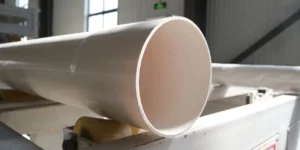
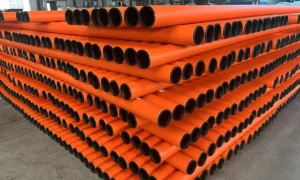
In the rapidly evolving world of underground power infrastructure, one product has emerged as a game-changer: MPP threading pipe. As cities expand and power demands grow, the need for efficient, durable, and non-invasive cable protection solutions has never been greater.
MPP (Modified Polypropylene) pipe, also known as MPP power pipe or MPP cable conduit, is revolutionizing how high-voltage power cables are laid underground. Unlike traditional materials, MPP pipe combines exceptional strength, high-temperature resistance, and the ability to be installed without trenching—saving time, money, and environmental disruption.
This comprehensive guide covers everything you need to know about MPP threading pipe: material properties, specifications, installation methods, advantages, and selection criteria for your next power engineering project.
What is MPP Threading Pipe?
MPP threading pipe is a specialized plastic conduit made from modified polypropylene (MPP) , designed primarily for protecting high-voltage power cables (10kV and above) in underground installations. The “threading” refers to its use in cable pulling applications—its smooth inner wall allows cables to be easily threaded through the conduit.
Basic Terminology:
| Term | Description |
|---|---|
| MPP | Modified Polypropylene (改性聚丙烯) |
| Threading Pipe | Conduit designed for cable pulling/threading |
| Trenchless Installation | Pipe laying without open excavation (directional drilling, jacking) |
| Ring Stiffness (SN) | Measure of pipe’s resistance to deformation (SN24, SN32, SN40) |
| Hot Melt Butt Welding | Joining method using heat to fuse pipe ends |
Key Characteristics:
| Property | Typical Value |
|---|---|
| Material | Modified polypropylene (MPP) |
| Density | 0.91-0.96 g/cm³ |
| Operating Temperature | -5°C to 70°C (some grades: -20°C to 70°C) |
| Melting Point | ~200°C (for welding) |
| Color | Orange (standard for power applications) |
| Standard Lengths | 6m, 9m, 12m (custom lengths available) |
| Lifespan | 50+ years underground |
| Applicable Voltage | 10kV and above |
MPP Pipe vs. HDPE Pipe: Critical Differences
One of the most common questions is how MPP differs from HDPE (High-Density Polyethylene). While both are thermoplastics used for pipe applications, MPP has distinct advantages for power cable protection.
| Feature | MPP Pipe | HDPE Pipe |
|---|---|---|
| Material | Modified Polypropylene | High-Density Polyethylene |
| Heat Deflection Temperature | Higher (≥120°C) | Lower (~80°C) |
| Tensile Strength | Higher (≥24 MPa at 23°C) | Lower (~20-23 MPa) |
| Compression Resistance | Higher | Lower |
| Low-Temperature Impact | Good (with modification) | Excellent |
| Flexibility | Rigid (less bending) | Flexible (more bending) |
| Trenchless Installation | Excellent (high jacking strength) | Good |
| Cost | Moderate | Lower |
| Best For | High-voltage power, trenchless | Water, gas, lower voltage |
When to choose MPP:
- High-voltage power cable protection (10kV+)
- Trenchless installation (directional drilling, jacking)
- High-temperature environments
- Applications requiring high ring stiffness (SN32, SN40)
When to choose HDPE:
- Water and gas transmission
- Lower voltage cable protection
- Flexible routing requiring bending
- Cost-sensitive projects
Key advantage: MPP offers higher heat resistance and compressive strength than HDPE, making it superior for high-voltage cable protection where cables generate significant heat during operation.
How MPP Threading Pipe is Manufactured
MPP pipe is produced through extrusion using modified polypropylene resin as the primary raw material.
Production Process:
- Raw material preparation: Modified polypropylene resin is mixed with additives (antioxidants, nucleating agents, coupling agents) to enhance performance
- Extrusion: The mixture is melted and extruded through a die to form the pipe shape
- Sizing and cooling: The pipe passes through a sizing sleeve and cooling bath to set dimensions
- Haul-off: Continuous pulling maintains consistent wall thickness
- Cutting: Pipes are cut to specified lengths (typically 6m, 9m, or 12m)
- Quality testing: Ring stiffness, impact resistance, and dimensional accuracy are verified
Two Main Types of MPP Pipe:
| Type | Application | Buried Depth |
|---|---|---|
| Ordinary Type (开挖型) | Open excavation installation | < 4 meters |
| Reinforced Type (非开挖型) | Trenchless installation (jacking/directional drilling) | > 4 meters |
Complete MPP Pipe Specifications
Standard Sizes and Dimensions
MPP pipes are manufactured in various diameters and wall thicknesses to meet different ring stiffness requirements.
| Nominal Diameter (DN, mm) | SN24 Wall Thickness (mm) | SN32 Wall Thickness (mm) | SN40 Wall Thickness (mm) |
|---|---|---|---|
| 110 | 5.7 | 7.2 | 9.1 |
| 125 | 6.4 | 8.2 | 10.3 |
| 140 | 7.2 | 9.2 | 11.6 |
| 160 | 8.2 | 10.5 | 13.2 |
| 180 | 9.2 | 11.8 | 14.9 |
| 200 | 10.3 | 13.1 | 16.5 |
| 225 | 11.6 | 14.8 | 18.6 |
| 250 | 12.8 | 16.4 | 20.6 |
Data source: Technical specifications for MPP power pipes
Ring Stiffness (SN) Grades
| Grade | Ring Stiffness (kN/m²) | Typical Application |
|---|---|---|
| SN24 | 24 | Light-duty, shallow burial |
| SN32 | 32 | Medium-duty, standard applications |
| SN40 | 40 | Heavy-duty, deep burial, high traffic areas |
Selection guide:
- SN24: Footpaths, green spaces, light traffic areas
- SN32: Standard road crossings, general municipal use
- SN40: Heavy traffic roads, highways, deep burial (>4m)
Weight per Meter (kg/m) – SN24/SN32/SN40
| Diameter (mm) | SN24 Weight | SN32 Weight | SN40 Weight |
|---|---|---|---|
| 110 | 1.81 | 2.25 | 2.78 |
| 125 | 2.35 | 2.91 | 3.57 |
| 140 | 2.91 | 3.65 | 4.49 |
| 160 | 3.78 | 4.75 | 5.84 |
| 180 | 4.77 | 5.99 | 7.40 |
| 200 | 5.92 | 7.40 | 9.11 |
| 225 | 7.48 | 9.37 | 11.54 |
| 250 | 9.16 | 11.54 | 14.19 |
*Weight calculated at density of 0.95 g/cm³*
Physical and Mechanical Properties
| Property | Test Condition | MPP Pipe Value | Test Method |
|---|---|---|---|
| Density | 23°C | 0.91-0.96 g/cm³ | GB1033-86 |
| Sliding Friction Coefficient | — | < 0.35 | GB/T3960-89 |
| Tensile Strength | 23±2°C | ≥24 MPa | GB/T1040-92 |
| Tensile Strength | 70±2°C | ≥18 MPa | GB/T1040-92 |
| Flexural Strength | 23±2°C | ≥37 MPa | GB/T9341-2000 |
| Flexural Modulus | 23±2°C | 1000-1200 MPa | GB/T9341-2000 |
| Vicat Heat Resistance | 10N, 50°C/h | ≥120°C | GB/T1633-2000 |
| Flat Test (-5°C) | 1/2 compression | No rupture | GB9647-88 |
| Drop Hammer Impact | -5°C/8h | 9/10 no rupture | GB/T6112-1985 |
Source: MPP pipe technical specifications
Key Properties and Advantages of MPP Threading Pipe
1. High Temperature Resistance
MPP pipes maintain structural integrity at elevated temperatures. With a Vicat softening point ≥120°C and long-term operating range of -5°C to 70°C, MPP outperforms HDPE in heat resistance.
Why this matters: High-voltage cables generate significant heat during operation. MPP’s heat resistance prevents pipe deformation and ensures continuous cable protection.
2. Excellent Mechanical Strength
MPP offers higher tensile and compressive strength than HDPE:
| Property | MPP | HDPE |
|---|---|---|
| Tensile Strength (23°C) | ≥24 MPa | ~20-23 MPa |
| Flexural Strength | ≥37 MPa | ~25-30 MPa |
Why this matters: Higher strength means better resistance to soil pressure, vehicle loads, and jacking forces during trenchless installation.
3. Smooth Inner Surface for Easy Threading
The smooth inner wall (friction coefficient < 0.35) reduces resistance when pulling cables through the conduit.
Why this matters: Lower friction means:
- Easier cable installation
- Reduced wear on cable insulation
- Longer cable pulling distances
- Lower labor and equipment costs
4. Trenchless Installation Capability
MPP pipe is specifically designed for trenchless construction methods including horizontal directional drilling (HDD) and pipe jacking.
Why this matters: Trenchless installation offers:
- No road excavation or traffic disruption
- Preservation of landscapes and existing structures
- Reduced construction time (30-50% faster)
- Lower overall project costs
- Ability to cross rivers, railways, and highways
5. Electrical Insulation
MPP material has excellent dielectric properties, providing reliable electrical insulation for high-voltage cables.
Why this matters: Prevents leakage current, short circuits, and ensures safe power transmission.
6. Corrosion and Chemical Resistance
MPP resists attack from most chemicals, including acids, alkalis, and salts found in soil.
Why this matters: Ensures 50+ year service life without degradation, even in aggressive soil conditions.
7. Lightweight Construction
Despite its strength, MPP pipe is lightweight compared to steel or concrete conduits.
| Material | Relative Weight |
|---|---|
| MPP Pipe | 1 (lightest) |
| Steel Pipe | ~8 |
| Concrete Pipe | ~5 |
Why this matters: Lower transportation costs, easier handling, reduced equipment requirements.
8. Long Service Life
MPP pipes have a design life of 50+ years when installed underground, protected from UV exposure.
Applications of MPP Threading Pipe
1. High-Voltage Power Cable Protection (Primary Application)
MPP pipe is the preferred choice for protecting 10kV and above high-voltage transmission cables.
Typical projects:
- Urban power grid upgrades
- Substation connections
- Industrial power supply
2. Trenchless Crossing Construction
MPP’s high jacking strength makes it ideal for trenchless installations under obstacles.
Crossing applications:
- Road and highway crossings
- Railway embankments
- Rivers and waterways
- Building foundations
- Heritage conservation areas
3. Telecommunications
MPP pipes are also used for protecting fiber optic and communication cables.
4. Municipal Infrastructure
Beyond power, MPP can be used for:
- Gas pipelines
- Water supply
- Heating networks
- Sewage and drainage
Trenchless Installation Methods
Horizontal Directional Drilling (HDD)
The most common method for MPP pipe installation. A drill rig creates a pilot bore, which is then enlarged, and the MPP pipe string is pulled through.
MPP advantages for HDD:
- High tensile strength to withstand pulling forces
- Smooth outer surface reduces friction
- Joint integrity from hot melt welding
Pipe Jacking
Used for larger diameters and shorter distances. Hydraulic jacks push the pipe through the soil from a launch pit.
MPP advantages for jacking:
- High compressive strength
- Rigid enough to transmit jacking forces
- Lightweight reduces equipment needs
Open Excavation (Trenching)
Traditional method where a trench is dug, pipe laid, and trench backfilled. Suitable for ordinary type MPP pipes in areas where excavation is permitted.
Jointing Methods for MPP Pipe
Hot Melt Butt Welding (Recommended)
The most common and reliable method for joining MPP pipes.
Procedure:
- Clean and clamp pipe ends in welding machine
- Face off ends to create smooth, parallel surfaces
- Heat with mirror plate at ~200°C
- Remove heating plate and bring pipe ends together under pressure
- Hold until cooled
Advantages:
- Creates homogeneous, leak-proof joint
- Joint strength equals pipe body
- No additional fittings required
- Suitable for trenchless installation
Critical requirements:
- Pipe axes must be aligned
- End faces must be vertical and flat
- Temperature, time, and pressure adjusted for conditions
Socket Fusion (Coupler Connection)
Alternative method using pre-fabricated coupler fittings.
Procedure:
- Insert pipe end into heating tool with coupler
- Heat both surfaces simultaneously
- Remove tool and push pipe into coupler
Maximum Allowable Pulling Force (for Trenchless Installation)
When installing MPP pipe via HDD, pulling force must not exceed the pipe’s capacity to prevent damage.
| Diameter (mm) | SN24 Max Pull (kg) | SN32 Max Pull (kg) | SN40 Max Pull (kg) |
|---|---|---|---|
| 110 | 3,060 | 3,700 | 4,600 |
| 125 | 3,800 | 4,800 | 5,900 |
| 140 | 4,800 | 6,000 | 7,500 |
| 160 | 6,300 | 7,900 | 9,700 |
| 180 | 7,900 | 10,000 | 12,400 |
| 200 | 9,800 | 12,300 | 15,200 |
| 225 | 12,400 | 15,600 | 19,300 |
| 250 | 15,300 | 19,300 | 23,800 |
Data source: MPP pipe technical specifications
Note: These values are at 23±2°C. Pulling forces should be reduced at lower temperatures.
Minimum Bending Radius
For directional drilling applications, the pipe’s minimum bending radius is critical.
Example: For DN160 pipe (160mm OD), minimum bend radius = 160mm × 75 = 12,000mm (12 meters).
Installation and Handling Guidelines
Transportation and Storage
| Do’s | Don’ts |
|---|---|
| Store on level ground | Drop or throw pipes |
| Keep away from direct sunlight | Expose to oil or chemicals |
| Use timber supports | Scratch or gouge surface |
| Cover with tarps for outdoor storage | Stack excessively high |
Construction Precautions
- Sun exposure: Protect pipes from prolonged UV exposure during storage and construction
- Impact protection: Avoid dropping or striking pipes, especially in cold weather
- End preparation: Cut ends must be square and clean before welding
- Temperature adjustment: Adjust welding parameters for ambient temperature conditions
Quality Inspection
Visual checks:
- No cracks, bubbles, or contamination on inner/outer surfaces
- Uniform wall thickness
- Smooth joint welds (no voids or misalignment)
Dimensional checks:
- Outer diameter within tolerance
- Wall thickness meets specification
- Length as ordered
Standards and Compliance
Cost Considerations
Factors Affecting MPP Pipe Price
Approximate Price Range (Reference)
| Diameter | SN24 (USD/m) | SN32 (USD/m) | SN40 (USD/m) |
|---|---|---|---|
| 110mm | ~$3-5 | ~$4-6 | ~$5-7 |
| 160mm | ~$5-7 | ~$6-8 | ~$8-10 |
| 200mm | ~$7-9 | ~$9-11 | ~$11-14 |
| 250mm | ~$10-12 | ~$12-15 | ~$15-18 |
Prices are estimates and vary by supplier, quantity, and market conditions.
Environmental Considerations
| Aspect | Assessment |
|---|---|
| Material | Polypropylene is recyclable |
| Production energy | Moderate (less than steel or concrete) |
| Installation impact | Low (trenchless = minimal surface disruption) |
| Lifespan | 50+ years (reduces replacement frequency) |
| Recyclability | 100% recyclable at end of life |
Eco-advantage: Trenchless installation with MPP pipe eliminates the need for road excavation, preserving existing infrastructure and reducing construction-related emissions by up to 70% compared to open-cut methods.