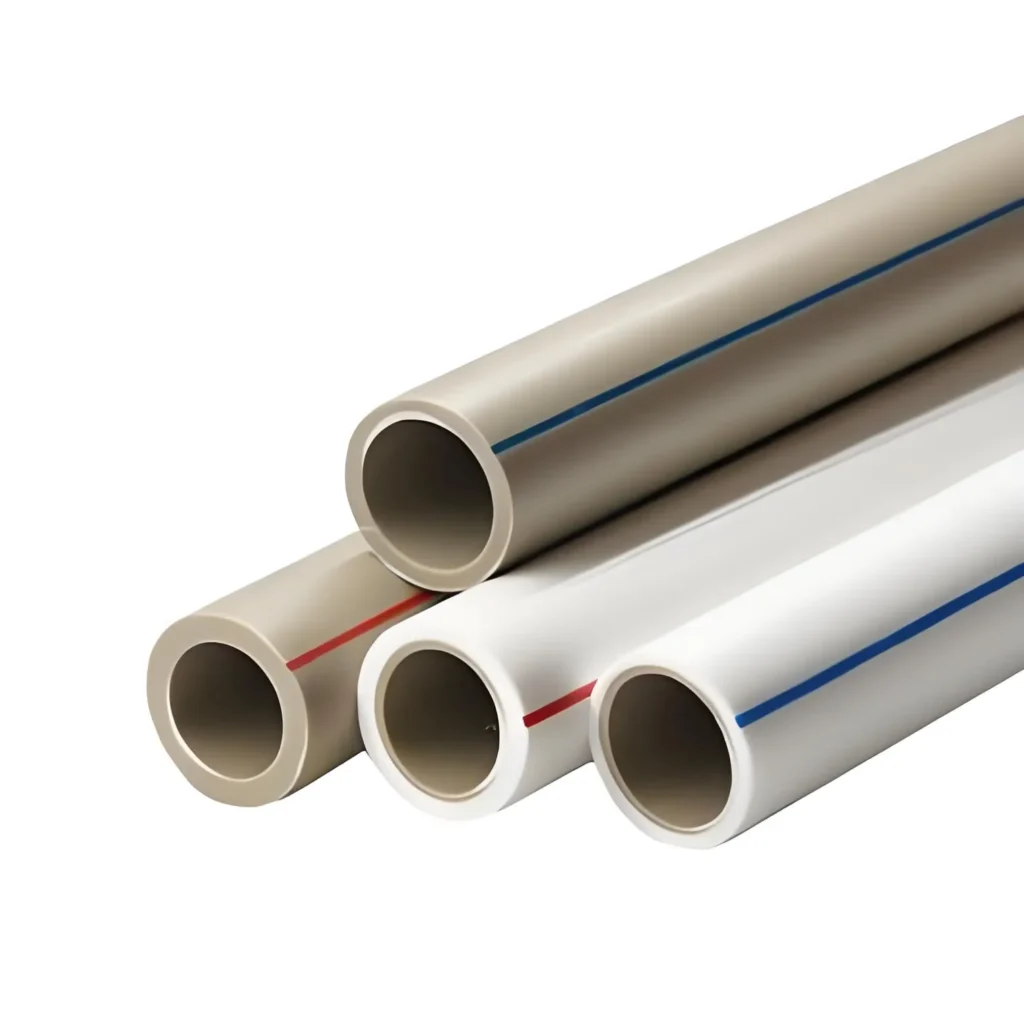
Walk into any modern building under construction today, and you’re likely to see a contractor wielding a sleek welding machine, fusing together bright green or white pipes. This is the world of PPR piping, a technology that has quietly revolutionized how we move water in residential, commercial, and industrial settings.
If you are planning a new build, renovating a home, or specifying materials for a large-scale project, understanding PPR pipes is essential. This guide will take you through everything you need to know, from what they are made of to why they have become the global standard for hot and cold water systems.
What Exactly is a PPR Pipe?
PPR stands for Polypropylene Random Copolymer . It is a type of thermoplastic pipe made from a specific grade of polypropylene. To understand why it’s special, it helps to know that polypropylene comes in three main types:
PP-R is the most advanced of the three. Its molecular structure—where copolymer segments are randomly distributed—gives it superior performance in terms of heat resistance, pressure tolerance, and flexibility compared to its predecessors . This material was first developed and used for plumbing in Europe during the 1980s and has since taken a massive share of the global piping market .
The Unmatched Advantages of PPR Systems
Why have architects and engineers overwhelmingly shifted from traditional materials like galvanized steel or copper to PPR? The answer lies in its impressive list of benefits.
1. Longevity and Durability
A PPR system, when properly installed, is designed to last. It can safely operate for more than 50 years under rated temperature and pressure conditions . It is highly resistant to corrosion, abrasion, and chemical buildup. Unlike metal pipes, it will not rust or scale up over time, which means your water pressure and quality remain high for decades .
2. High Temperature and Pressure Resistance
One of the standout features of PPR is its ability to handle both hot and cold water. It has a high Vicat softening point (around 131.5°C) and can withstand continuous operating temperatures up to 70°C, with short-term peaks up to 95°C . This makes it the perfect choice for radiator systems, underfloor heating, and domestic hot water supply .
3. Health and Environmental Safety
PPR is a green building material. Its molecular structure consists only of carbon and hydrogen atoms, meaning it contains no halogens or toxic elements . It does not alter the taste, color, or odor of the water, making it safe even for pure drinking water and food processing applications . Furthermore, the material is 100% recyclable .
4. Energy Efficiency (Heat Loss Prevention)
Plastic is a natural insulator. With a thermal conductivity of just 0.21 to 0.24 W/m•K (about 1/200th that of steel), PPR pipes ensure that the heat stays inside the pipe when transporting hot water . This results in significant energy savings and reduces the need for thick insulation layers.
5. Smooth Flow and Low Maintenance
The inner walls of PPR pipes are exceptionally smooth, with a low friction coefficient . This resistance to scaling and tuberculation (common in metal pipes) means the pipe diameter remains clear, ensuring high flow rates and virtually zero maintenance .
6. Lightweight and Easy Installation
PPR pipes are incredibly light—about 1/8th the weight of metal pipes . This makes them easy to transport and handle on site. The installation process, known as heat fusion (socket welding) , creates monolithic, leak-proof joints that are actually stronger than the pipe itself .
PPR vs. The Next Generation: PP-RCT
As technology evolves, so do materials. You may also come across the term PP-RCT.
- PP-R is the standard random copolymer.
- PP-RCT stands for Polypropylene Random Copolymer with modified Crystallinity and Temperature resistance .
PP-RCT is a newer generation material that offers approximately 25% higher stress capability and pressure rating than standard PP-R for the same wall thickness at a given temperature . This allows for the use of thinner pipes while maintaining the same performance, offering greater material efficiency. Crucially, PP-R and PP-RCT pipes and fittings are completely compatible and can be fused to one another .
Where Are PPR Pipes Used?
The versatility of PPR extends far beyond the plumbing inside your home. Its chemical resistance makes it suitable for a vast range of applications .
- Residential & Commercial Plumbing: The primary use for cold and hot water distribution, as well as heating systems (radiators, underfloor heating).
- Industrial Applications: Transport of aggressive liquids, chemical substances, compressed air, and industrial food processing.
- HVAC Systems: Chilled water piping for air conditioning and cooling towers, including in large data centers .
- Agriculture: Garden irrigation and rainwater systems.
- Municipal: Reclaimed water collection and distribution .
- Specialized Facilities: Hospitals, laboratories, and schools where water purity and chemical resistance are critical .
A Quick Guide to Selection and Installation
Choosing the right pipe is about understanding pressure ratings. PPR pipes are classified by their SDR (Standard Dimension Ratio) or Series (S) , which defines the wall thickness and thus the pressure they can handle (e.g., 1.25MPa, 1.6MPa, 2.0MPa, 2.5MPa) .
Installation Tip: The key to a reliable PPR system is the fusion welding process. Using a specialized welding machine, the pipe and fitting are heated to a precise temperature and then joined. This requires clean cuts and adherence to heating times (which vary by pipe diameter). When done correctly, the joint will not leak, even after decades of use . A common industry tip for home renovations is to use hot water pipes for the entire system, as they have thicker walls and higher pressure ratings, adding an extra layer of safety even for cold water lines .
Conclusion
From its eco-friendly composition to its incredible longevity and ease of installation, the PPR pipe is a true marvel of modern materials science. It has solved the age-old problems of corrosion and leakage that plagued traditional plumbing, providing a reliable backbone for the buildings and industries that rely on a safe and efficient water supply. Whether you are an engineer, a plumber, or a homeowner, the shift toward PPR is a shift toward a more durable and sustainable future.