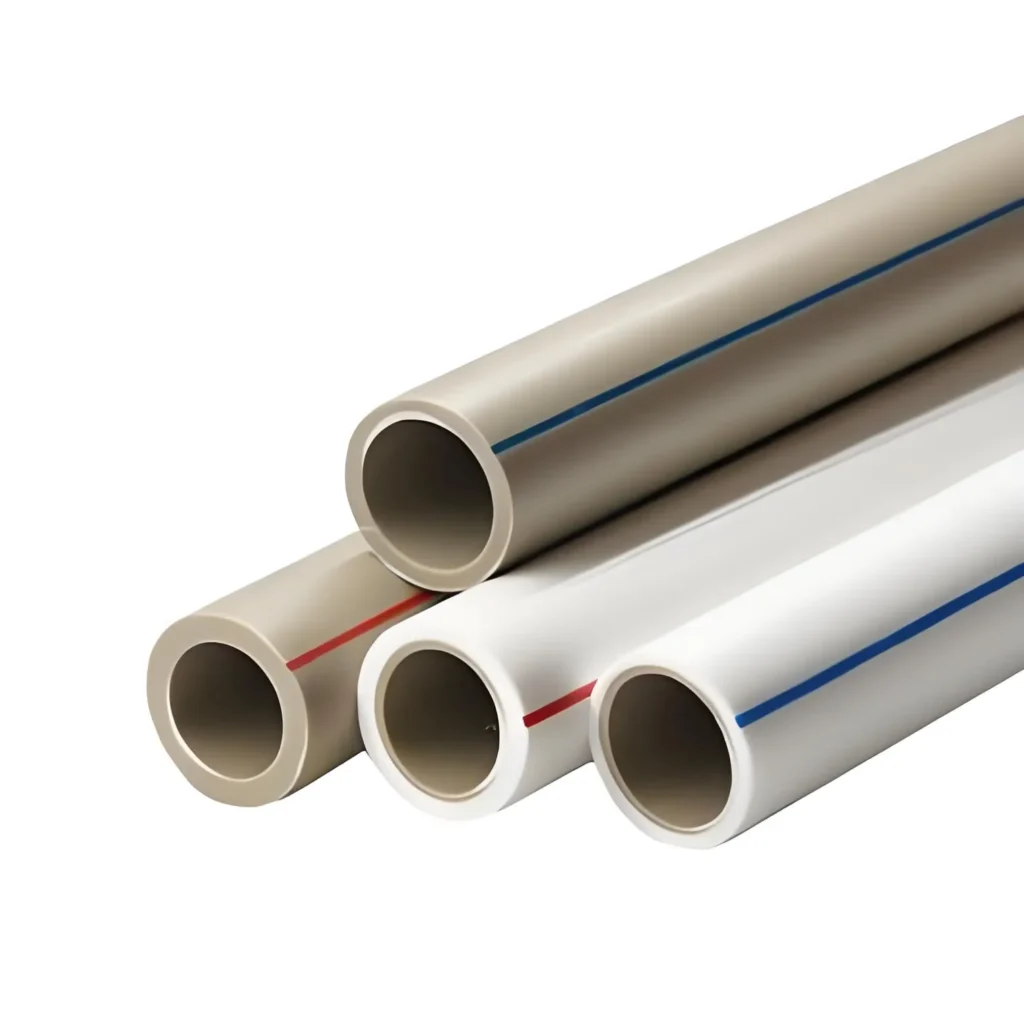
PPR (Random Copolymer Polypropylene) water pipe, as the core material for modern building hot and cold water supply systems, has comprehensively replaced traditional metal pipes, becoming a global standard for residential and commercial building water supply. Its exceptional performance and straightforward installation are shaping a new benchmark for safe, durable, and efficient water conveyance.

I. Core Advantages: Why Has PPR Become the Mainstream?
- Excellent Corrosion Resistance & Hygiene
- Scale-Resistant & Bacteriostatic: The smooth inner wall of the pipe resists scale buildup and effectively inhibits bacterial growth, ensuring water purity. It is the ideal choice for potable water systems.
- Chemically Resistant: Offers excellent resistance to acids and alkalis in water, preventing the “red water” or “blue water” phenomena associated with metal pipes.
- Long Service Life
- When operating under specified temperature and pressure conditions, PPR pipes can have a service life of over 50 years, nearly matching the lifespan of the building itself, achieving “install once, worry-free for life.”
- Heat Fusion Joints, Leak-Free
- Utilizes socket fusion welding, fusing the pipe and fitting into a single, monolithic structure. This fundamentally eliminates the risk of leakage at the joints, with the connection strength often exceeding that of the pipe itself.
- Superior Heat Resistance & Insulation
- An excellent choice for hot water pipes, its long-term operational temperature can reach 70°C, with short-term tolerance up to 95°C.
- Its thermal conductivity is only 1/200th that of metal pipes, providing good insulation properties and reducing heat loss during hot water transport.
- Economical & Eco-Friendly
- Lightweight, reducing transportation and installation costs.
- The material is recyclable, meeting green environmental requirements.
II. Main Application Areas
- Civil Construction: Main and branch lines for cold and hot water in apartments and villas.
- Commercial & Public Facilities: Centralized water supply systems for hotels, hospitals, and schools, especially purified drinking water pipelines where water quality is critical.
- Industrial Sector: For conveying certain chemical fluids, compressed air, etc.
- Underfloor Heating Systems: Performs excellently as floor heating coils due to its flexibility and durability.
III. Key Parameters & Specifications
- Pipe Series (S): Indicates the pressure rating/wall thickness grade of the pipe. Common series are S5, S4, S3.2 (corresponding to PN1.25, PN1.6, PN2.0 MPa). A lower number indicates higher pressure resistance and a thicker wall. S3.2 or S2.5 are commonly used in home installation.
- Outer Diameter: Common sizes include De20 (4分, ~½ inch), De25 (6分, ~¾ inch), De32 (1寸, ~1 inch), etc. Selection depends on water pressure and flow rate requirements.
- Color: Common colors are white (for indoor exposed installation), gray (for projects), and green (often for identification). Color does not affect core performance, but high-quality raw materials typically result in uniform color with no discoloration.
IV. Professional Installation Guide: Key Points of Heat Fusion
“For PPR, three parts depend on the material, seven parts depend on the installation.” The performance of PPR pipes highly depends on standardized installation.
- Cutting: Use a dedicated pipe cutter for a square, clean cut, ensuring the end is smooth and burr-free.
- Cleaning: Clean the welding surfaces of the pipe and fitting with a lint-free cloth before fusion.
- Heating:
- Temperature is Key: Set the fusion welder temperature to 260±5°C.
- Timing is Critical: Push the pipe and fitting simultaneously onto the heating tool without rotation. The heating time must strictly follow the manufacturer’s parameter table (example below). Under-heating or over-heating compromises joint quality.
| Pipe Outer Diameter (mm) | Heating Time (seconds) | Insertion & Alignment Time (seconds) | Cooling Time (seconds) |
|---|---|---|---|
| 20 | 5 | 4 | 2 |
| 25 | 7 | 4 | 2 |
| 32 | 8 | 4 | 4 |
- Connection & Cooling: After heating, quickly remove and connect the pipe and fitting in a straight line to the marked depth. During the cooling period, never rotate or stress the joint, as this can create a weak, faulty bond.
V. Common Misconceptions & Selection Advice
- Misconception 1: Thicker Wall is Always Better: For the same pressure rating (S-series), the wall thickness should be appropriate. Excessively thick walls can reduce the internal diameter, affecting water flow rate, and increase cost.
- Misconception 2: All PPR Pipes are the Same: Choose reputable brands to ensure pure raw materials (e.g., Borealis, LyondellBasell imported grades or high-quality materials from major domestic producers). Avoid inferior pipes made from recycled materials.
- Selection Advice:
- Check Appearance: Clear markings on the pipe; smooth inner and outer walls, free from bubbles, impurities, or indentations.
- Smell: High-quality PPR pipes are odorless.
- Feel the Material: Pipes made from high-quality material have good toughness and are not easily bent or deformed by hand.
Conclusion
With its comprehensive advantages in hygiene, safety, durability, and economy, PPR water pipes have become the preferred choice for modern building water supply systems. Correctly selecting qualified products and adhering to strict installation standards are essential to fully leverage their exceptional performance, creating a reliable and worry-free “vascular” network for your building.